On August 21, 2025, Dara Sobaloju posted a 90-word tweet that read like half an idea. He wanted to build an AI that would listen to pastors and auto-display the Bible verses they referenced, including the ones they paraphrased. He said he was going to build it completely in public, starting that day. Then he started.
6 months later, the desktop app was live on Windows and macOS. 8 months in, Pewbeam reportedly has more than 10,000 downloads and paying customers across 30 countries. The roster of churches publicly using it includes Koinonia, House on the Rock, RCCG, and Celebration Church International in Ibadan, where it was first live-tested in October 2025. Dara is now closing a funding round.
The product
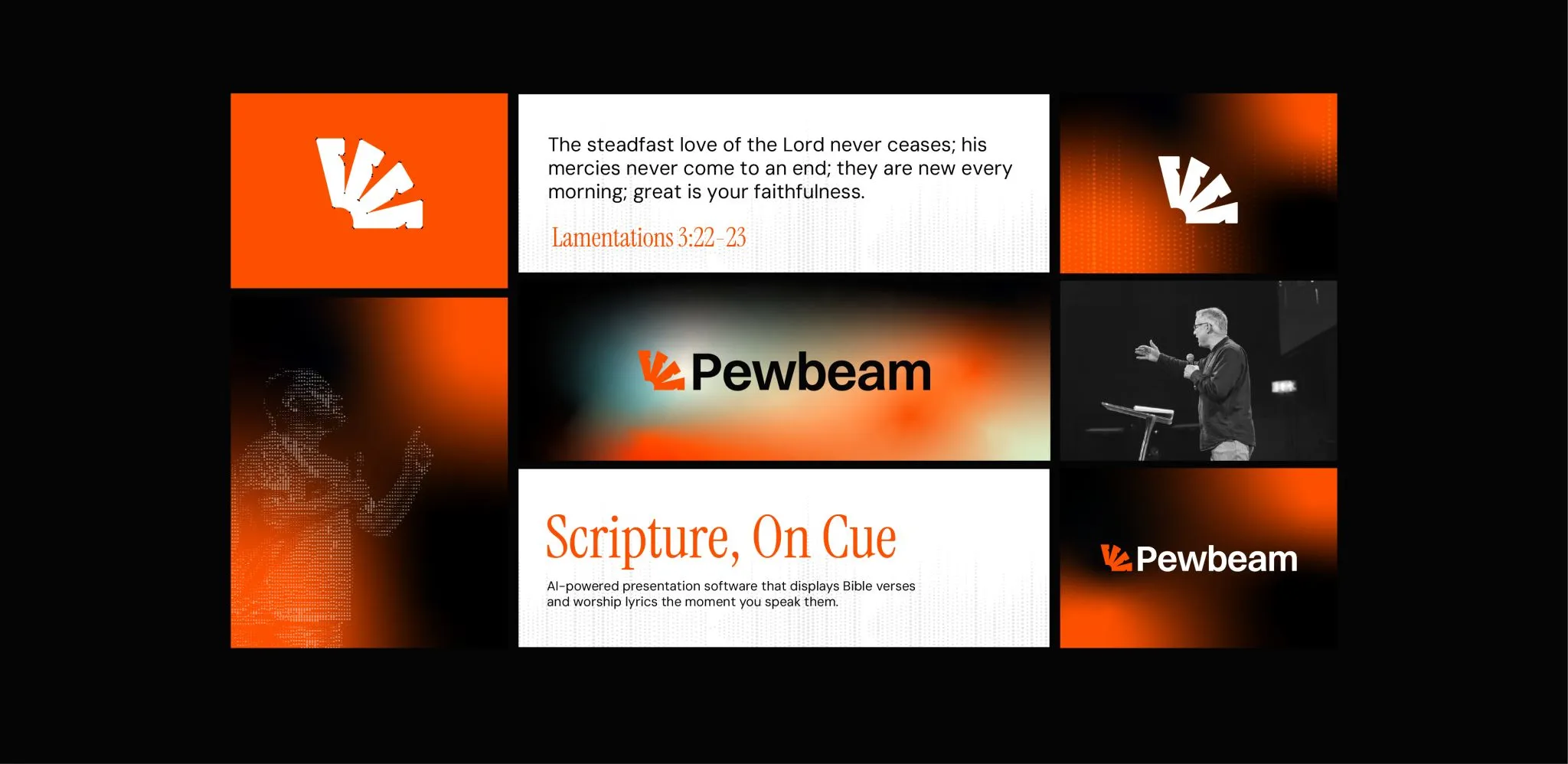
Pewbeam is a desktop app for church projection. It runs on a laptop in the projection booth, listens to the pastor in real time, and displays the right Bible verse on the projector within 2 seconds, including when the pastor paraphrases the verse rather than quoting it directly. It works offline, which matters in venues where the projector and the wifi are not on the same plane of reliability. Pricing runs from $0 a month for a free tier with 40 minutes of weekly transcription up to $30 a month for the full feature set with multiple devices and output channels.
The technical foundation is OpenAI Whisper for transcription, layered with a semantic Bible search the team built specifically to handle the ways preachers actually reference scripture. The brand and design come from Tony Deoye, a friend who joined as designer after the original X post. The team is small. The product is polished enough that the biggest churches in Nigeria adopted it within months of launch.
The bet
The interesting thing about Pewbeam is not the technology, which is clever but not unrepeatable. The interesting thing is how it was built.
Dara is a product development lead at Treepz, the mobility company. He had nursed the idea for 2 years and never shipped it. Then he tweeted about it, got encouragement from pastors and developers in the replies, and decided to build it in public, posting progress as he went. Within 6 months he had a working product, real customers, and press coverage from Technext, TechCabal, Condia, and most major African tech outlets. The fundraising round is now happening as a consequence of the public trail he built, not as the gating event before he started.
The build-in-public playbook is well-known in SaaS circles, but it typically gets applied to developer tools or productivity software, products where the audience is already on Twitter and already predisposed to support indie builders. Pewbeam applied it to the church market, an audience that mostly is not on Twitter and historically does not buy software. It worked anyway, because the public trail attracted the right intermediaries: pastors with networks, technologists with churches, journalists curious about an unusual vertical.
The bet underneath is that an unfamiliar market plus a transparent build plus genuine end-user testing equals a fundable company even without the conventional inputs. Dara had no SF connections, no accelerator backing, no obvious distribution advantage. He had a tweet, a clear problem to solve, and the willingness to ship publicly. The market filled in the rest.
What to watch
Pewbeam has a real competitor in Spetra, another Nigerian project by Tolulope Adeniyi, built on similar foundations (OpenAI Whisper, offline operation). The category is small enough that 2 serious entrants is a real signal, and the bigger established players (ProPresenter, EasyWorship) will eventually notice that AI-based scripture detection is a feature worth adding to their suites.
2 things will tell us whether the bet keeps working past the launch moment. Whether Pewbeam expands beyond verse detection into the broader sermon intelligence layer (transcription, notes, summaries, searchable archives), which is where recurring value and pricing power actually live. And whether the customer base broadens beyond African churches to the diaspora congregations in London, Houston, and Toronto, where willingness to pay is higher and word-of-mouth distribution compounds faster.
What we’re rooting for
We’re rooting for Pewbeam to add 150 new paying churches by end of Q3. That’s a 6x stretch from where they sit now, and the kind of number that converts a build-in-public story into a defensible business. Spotlight is cheering every adoption, every projection team that gets to focus on the worship experience instead of typing verses, and we hope Dara and Tony come back to share the win when the moment lands.
Churches interested in trying Pewbeam can download it free.